Eye Exams
Comprehensive Eye Exams
While this is not a comprehensive list here are some common areas addressed during a vision exam:
- A personal history – Previous eye disease or injuries, medical history, and general health information which may affect your vision.
- Visual field test – Detects any defect or blind spots in your field of vision.
- Visual acuity check – Determines how well you are seeing with and without your present glasses /contact lenses.
- Refraction – Determines your best prescription for far distance and retested using trial lenses to refine the Rx.
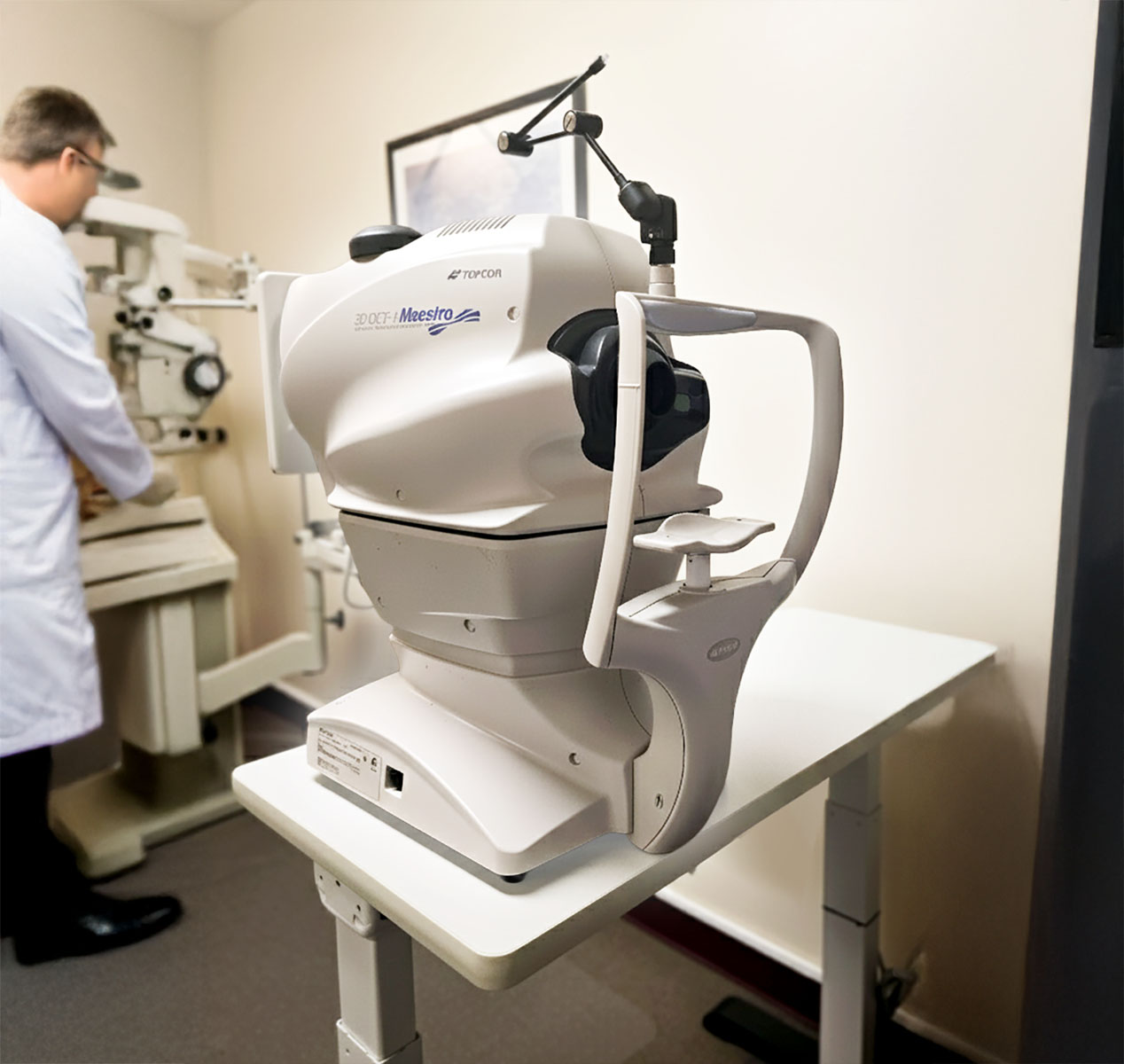
- OCT – Digital photos of central retinal tissue for establishing a baseline for future reference and provides early detection for neuro changes inside eye as well as the retina (back of eye) with side profiles as needed.
- Dilation – Dilating the pupils gives Dr. Hovander a better view of your internal eye structures (retina, lens, etc.) and helps diagnose possible early signs of Glaucoma, Cataracts, and other eye conditions.

Other Eye Exams
Other tests are performed to show if the eyes are over converging or diverging which may lead to stress, fatigue or double vision. A patient’s ability to focus is also determined to help detect any strain on one’s visual system that may lead to fatigue and headaches.
Digital retinal photographs may be taken to provide a baseline for future reference.
Other Diagnostic Tests such as Intra Ocular Pressure, Threshold Visual Field, Color Vision, Binocular, Dry Eye and other tests may be used as need.
What To Bring With You For Your Exam
When you come to our office to see Dr. Hovander for a routine exam, there are a few things that will help us determine your best possible prescription and help in keeping your eyes healthy.
Items to Bring:
1. Using a tape measure, determine the distance from the tip of your nose to the reading material (book, magazine, etc.). Note that distance in inches. Do the same for your computer, the tip of your nose to the computer monitor and bring a record of those measurements with you.
2. It is best to wear contacts to your exam and if you wear Rigid Gas Permeable lenses you may want to consider having a late afternoon appointment to determine the state of your eye after wearing lenses all day.
3. A list of your current medications and supplements.
4. Your vision and medical insurance information card, ID number, etc.
What To Bring With You For Your Exam
When you come to our office to see Dr. Hovander for a routine exam, there are a few things that will help us determine your best possible prescription and help in keeping your eyes healthy.
Items to Bring:
1. Using a tape measure, determine the distance from the tip of your nose to the reading material (book, magazine, etc.). Note that distance in inches. Do the same for your computer, the tip of your nose to the computer monitor.
2. Bring your current glasses, even if you wear contact lenses full-time. It’s OK to wear your contact lenses when you come in for your exam.
3. A list of your current medications and supplements.
4. Your vision and medical insurance information card, ID number, etc.
About Dr. Hovander
Dr. Hovander is trained in the diagnosis and treatment of eye diseases. He has a Washington State therapeutic license, which gives him the ability to prescribe drugs in the treatment of most eye diseases.
The thorough follow-up care during a course of treatment is to make sure that the prescribed treatment is effective and there are no complications or secondary conditions which may also become a problem.